Autumn leaves. Aren’t they things of beauty? Warm colours lighting up tree canopies in final, fiery hurrah before the trees become dormant for the winter.

Then they fall off.
And depending on your desire for neatness this can be more, or less of a problem.
Alas, what is charming in the forest is less practical and often unwelcome, in our manmade living environments.
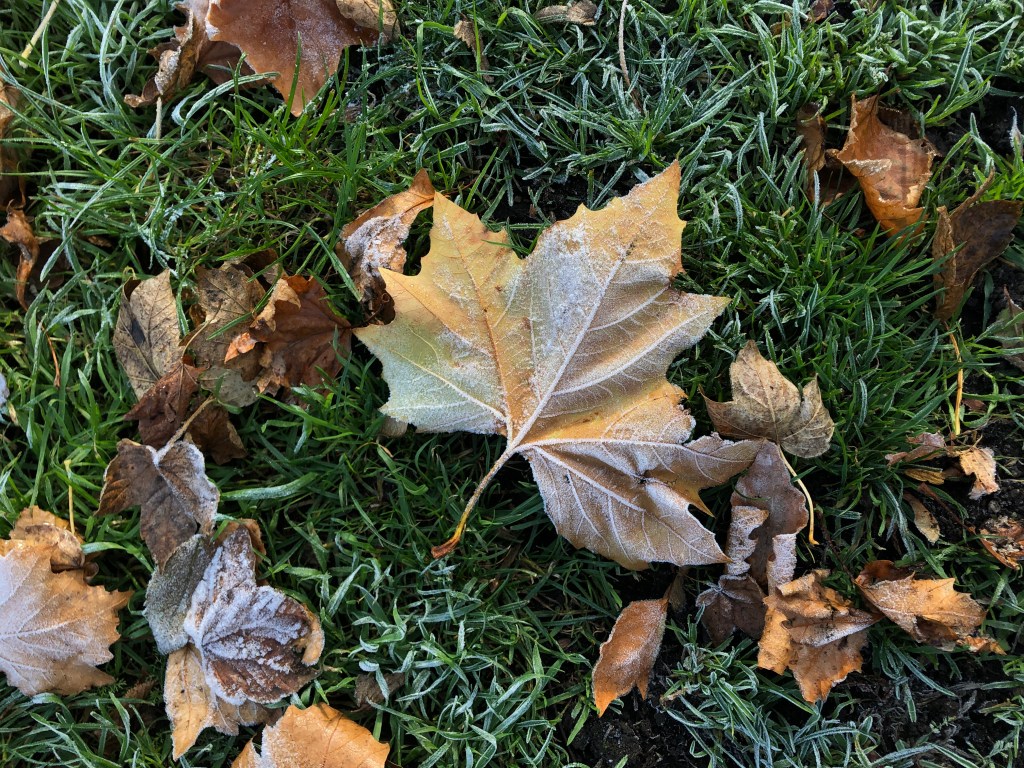
There are two main drawbacks to fallen leaves in the garden.
- If they are on a lawn, leaves can lead to yellow patches where growth is inhibted (lawns are very tough and will recover but it is probably simpler to avoid this happening in the first place).
- If left on paving and decking they can become slimy – and potentially deadly if you slip on them. Also, if allowed to decay into the cracks and crevices they will encourage ‘weeds’ to grow making more work for you come spring.
So you will probably want to move those leaves, which have so inconveniently fallen in the wrong place.
However, it would be remiss to overlook the benefits of ‘leaf litter’ and with a slight adjustment in perspective you can start to see these leaves as a benefit – a free gift from the trees even.
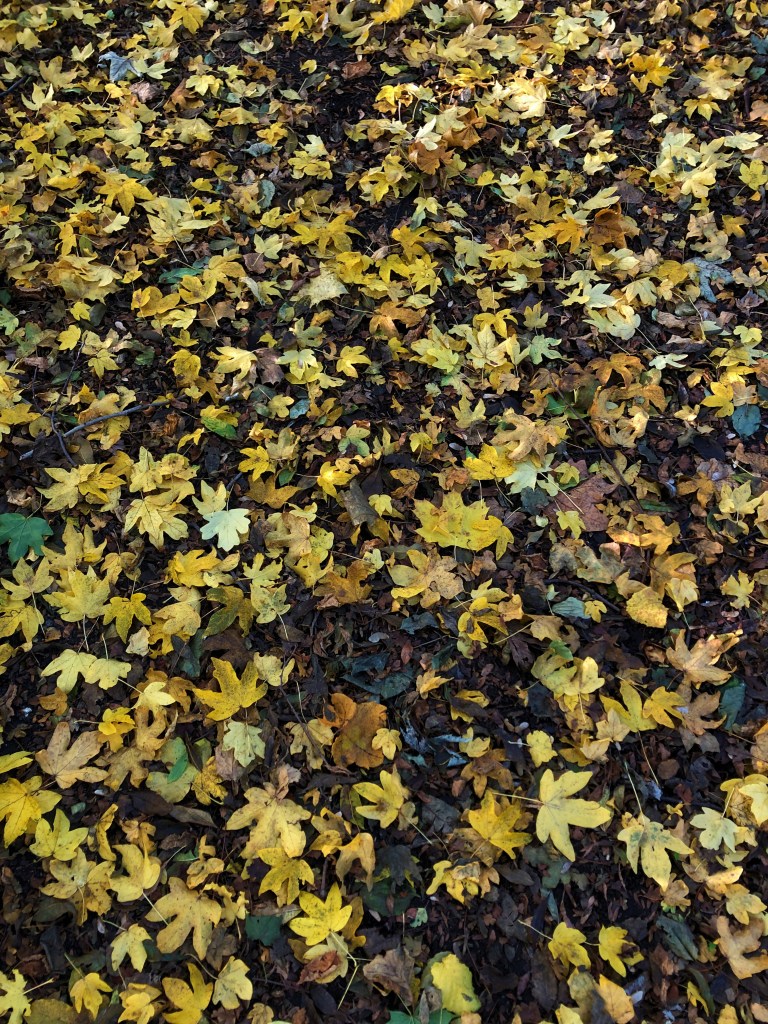
There are two main (and very simple) ways of using leaves in the garden;
- Make a leaf pile as habitat for wildlife
- Make leaf mould to use as mulch or for sowing seeds
Both of these are absurdly easy to do and will allow you to clear up leaves from your garden knowing you will use them well. You may even find your eyes casting greedily around at leaves that fall on the street in-front of your home.
To make a wildlife leaf pile:
- Choose a sheltered/unused area of the garden (neglected corner where nothing grows? Perfect).
- Gather all the leaves you can, pile them up in this spot (you’re aiming for a pile at least a foot high but anything is better than nothing). If you have some, add logs/twigs too.
- Leave well alone for as long as possible. If you are able to give this corner of your garden over to wildlife permanently – topping up with garden cuttings in the spring – then even better.
Your wildlife leaf pile will attract a variety of small mammals and invertebrates. Birds will visit too and use it as a buffet (that’s the circle of life folks!). If you’re lucky and there is access you may even have hedgehogs take up residence.
To make leaf mould:
- Take a large plastic bag*
- Put your collected leaves in the bag. A mix of types of leaves is best, but as always, work with what you have.
- Add some water if they are particularly dry.
- Stab a few holes in the bag with a hand fork. Careful here, you’re supposed to be stabbing the bag not yourself.
- Seal the bag and shove it somewhere in the garden, out of sight, for a couple of years.
- 2 years later…(gardening is not a fast paced sport) – you have some beautiful leaf mould – perfect for starting your seedlings off in or for mulching your beds.
*Saving old compost bags for this purpose is perfect and more sustainable than binning them after one use – once you get into this habit you’ll remember to cut them neatly at the top rather than impatiently hacking your way through the middle with a hand fork.
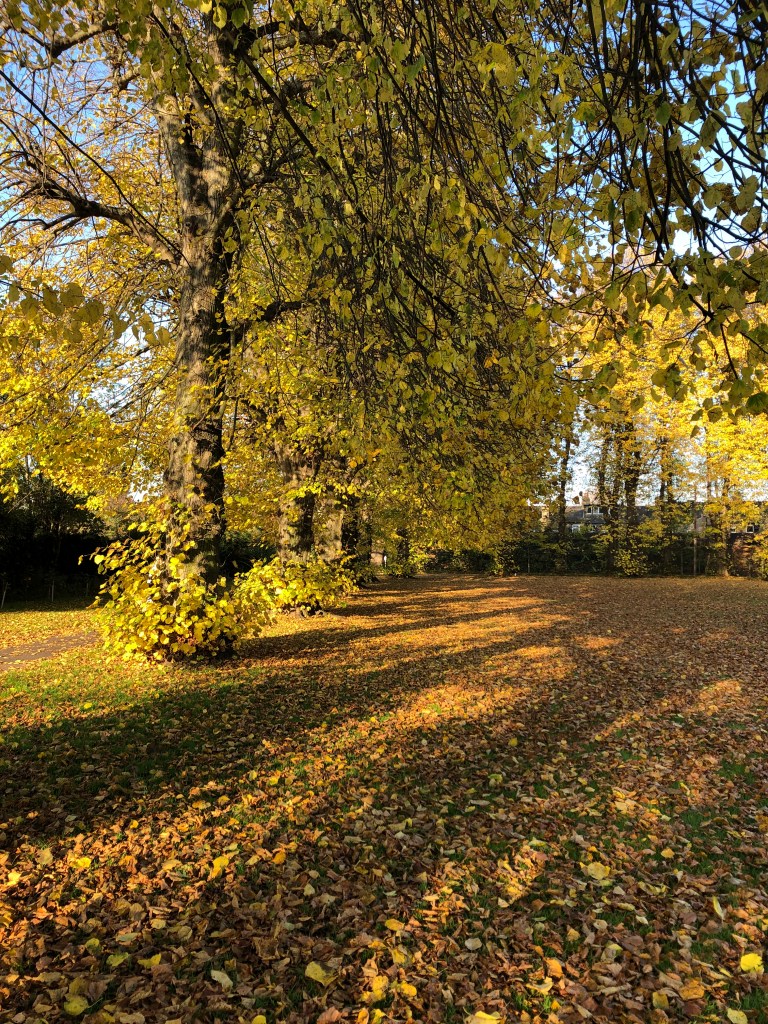
So in summary – autumn leaves; a beautiful gift on AND off the tree! Go grab some!
 East Organic Gardening